Identification guide

Bee, hornet
or fly?

Know what you've found before you act. A bee swarm is usually calm and can be saved. Hornets, on the other hand, need the Fire Department.

A bee swarm on a tree branch
A bee swarm resting on a branch
Identification tool

What have you found?

Answer 2–3 questions. Look from a safe distance; there's no need to go near the nest.

Swarm or nest?

A swarm is a colony "moving house"

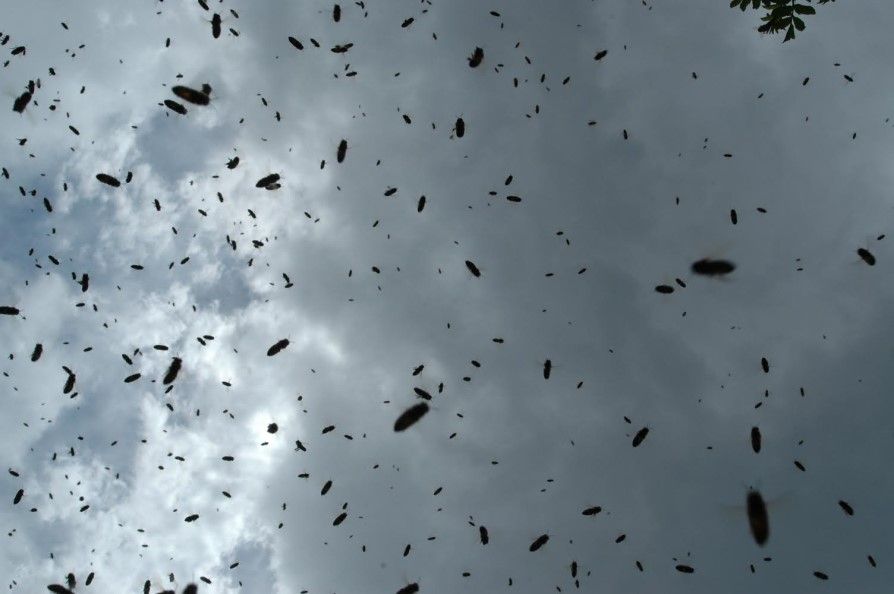
Bees reproduce by splitting the colony. A queen flies off with thousands of workers in a swarm, then they rest while scout bees look for a new home. It is not an attack.

Swarm (not yet nesting)

Looks like
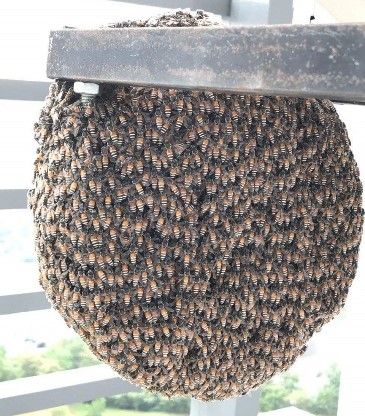
A hanging ball- or teardrop-shaped clump of bees. No comb visible.
Location
Out in the open: a branch, fence, pole, under an air-con or roof.
How long
A few hours to 2–3 days, then it moves on.
Behaviour
Calm. There is no nest or brood to defend.
What to do
Report it straight away. This is the easiest time to relocate it.

Nest (established colony)

Looks like
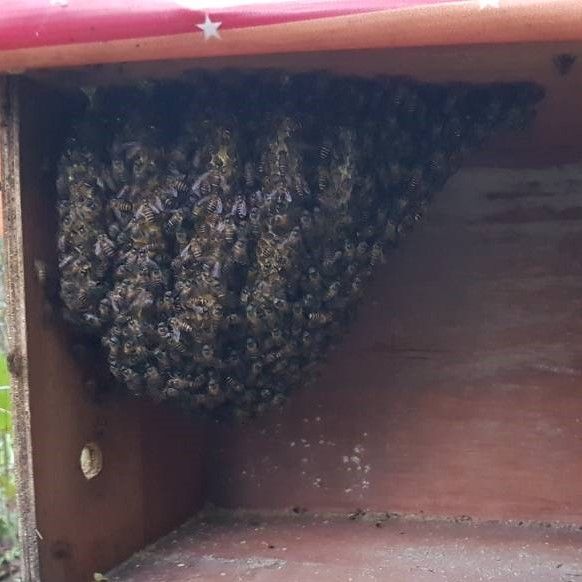
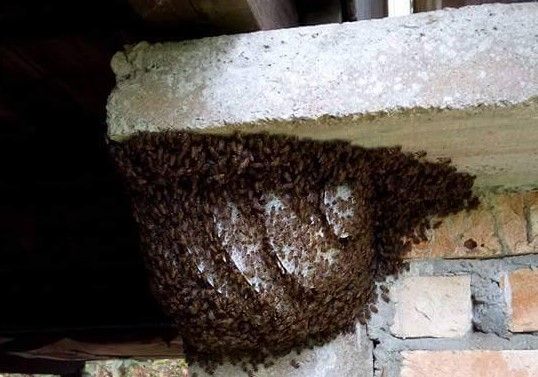
Hexagonal wax comb is visible, or bees fly in and out of one gap.
Location
Inside a wall, ceiling, box or tree. Giant and dwarf honey bees build exposed comb on branches or bars.
How long
Stays for months until it is relocated.
Behaviour
More defensive. The bees protect their eggs and honey.
What to do
Needs relocation by an activist. Don't block the entrance.
Bees of Malaysia

Know the bees you might meet

There are about 20,000 bee species in the world: honey bees, stingless bees, solitary bees and bumblebees. These are the ones most often found in Malaysia.

Giant Honey Bee

Giant Honey Bee

Danger

Apis dorsata

  • SizeLarge, ±17–20 mm
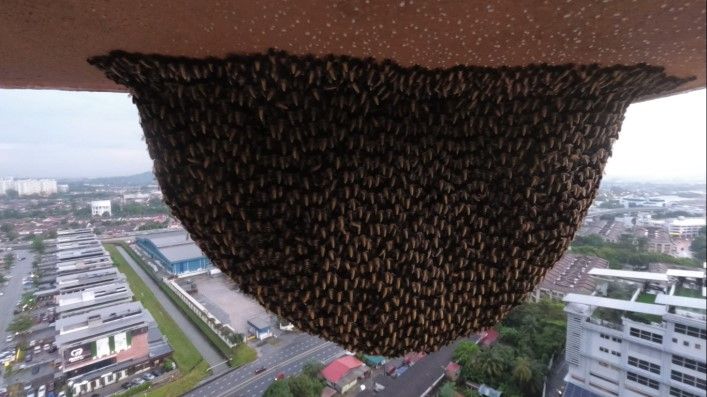
  • NestA single large exposed comb, half-moon shaped, high up in open, windy places: big branches, under the eaves of tall buildings, overhead bridges.

The most defensive. When disturbed, the bees form hanging "chains" as a sign they are ready to attack. Relocation often needs a skylift and at least two activists.

Dwarf Honey Bee

Dwarf Honey Bee

Low risk

Apis florea, Apis andreniformis

  • SizeSmall, ±7–10 mm
  • NestA single small comb (palm- to ball-sized) wrapped around a thin twig or bar 1–2 cm thick. Often in shrubs, fences, clothes lines and garden plants.

Fairly gentle with a weak sting. Usually easy to relocate together with the twig.

Asian Honey Bee

Asian Honey Bee

Be careful

Apis cerana

  • SizeMedium, ±10–11 mm
  • NestSeveral parallel combs in closed, dark spaces: wall cavities, ceilings, meter boxes, speakers, hollow trees. Sometimes in the open. Related species: A. koschevnikovi and A. nuluensis (Borneo).

The bee most often found in homes. It can be kept in hive boxes. Its population in Malaysia nearly collapsed in 1996–1997 because of Varroa mites.

Stingless Bee

Harmless

Heterotrigona itama, Geniotrigona thoracica and others

  • SizeVery small, ±4–8 mm, mostly black
  • NestInside hollow trees, poles, pipes or walls. The entrance is a sticky tube made of resin (propolis).

Doesn't sting; at worst it bites or gets caught in hair. Kelulut honey is highly valued. It rarely needs to be moved.

Carpenter Bee

Low risk

Xylocopa spp.

  • SizeVery large, ±20–30 mm, shiny black
  • NestBores neat round holes (±1–1.5 cm) in dead wood, bamboo, beams or wooden trellises. Lives alone, not in a colony.

Its loud buzz is scary but it isn't aggressive. Males have no sting. It never forms a swarm.

In Malaysia, the European honey bee (Apis mellifera) is usually only found on bee farms.

Not a bee!

Insects often mistaken for bees

The simplest test: a bee swarm is a clump of insects, while a hornet or wasp nest is a structure made of paper or mud. MY Bee Savior only relocates bees. For hornets, call the Fire Department.

🐝 Honey bee⚠️ Hornet / wasp🪰 Hoverfly
BodyFuzzy, plumpSmooth and shiny, narrow waistA little fuzz, huge eyes
Wings442
AntennaeLong, elbowedLongVery short
FlightDirect, back and forth to flowersLong legs danglingHovers motionless
NestHexagonal wax combPaper or mudNone
StingOnce (sting stays in skin)Again and againNone
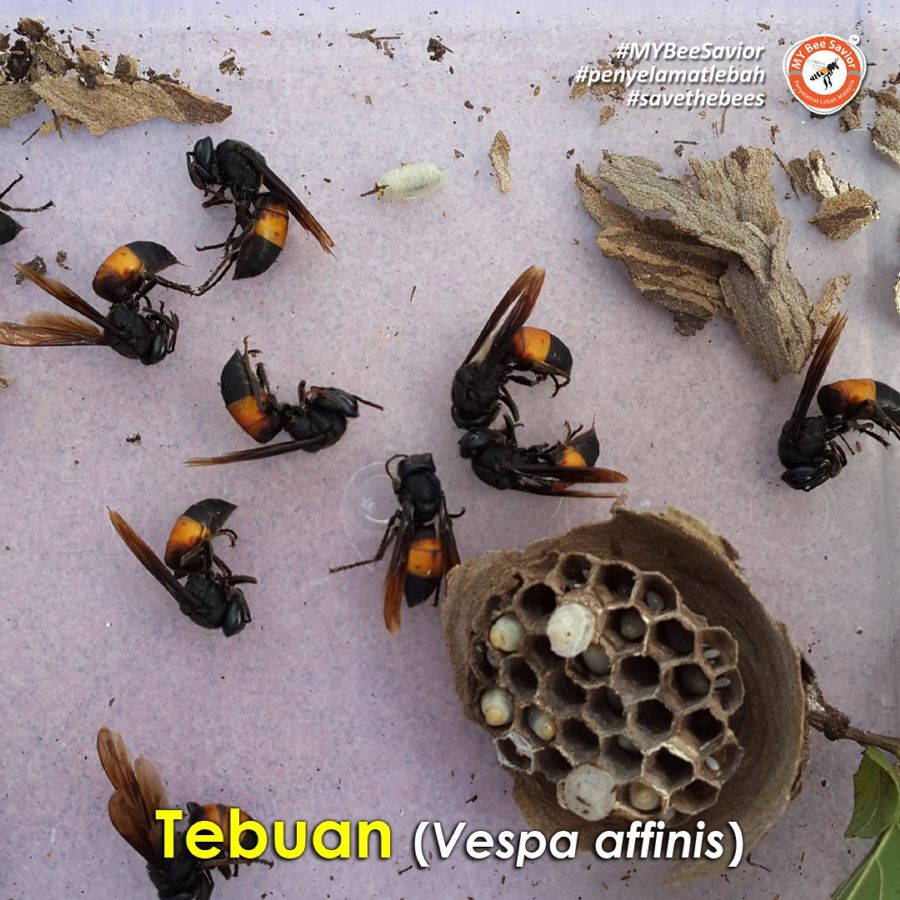
Lesser Banded Hornet
NOT A BEE

Lesser Banded Hornet

Danger

Vespa affinis

Black with a bright orange/yellow band at the base of the abdomen, smooth body, ±20–25 mm. Enclosed oval nest that looks like layered paper or bark, in trees and roofs.

Very dangerous: it can sting again and again. Keep away and call the Fire Department (999).

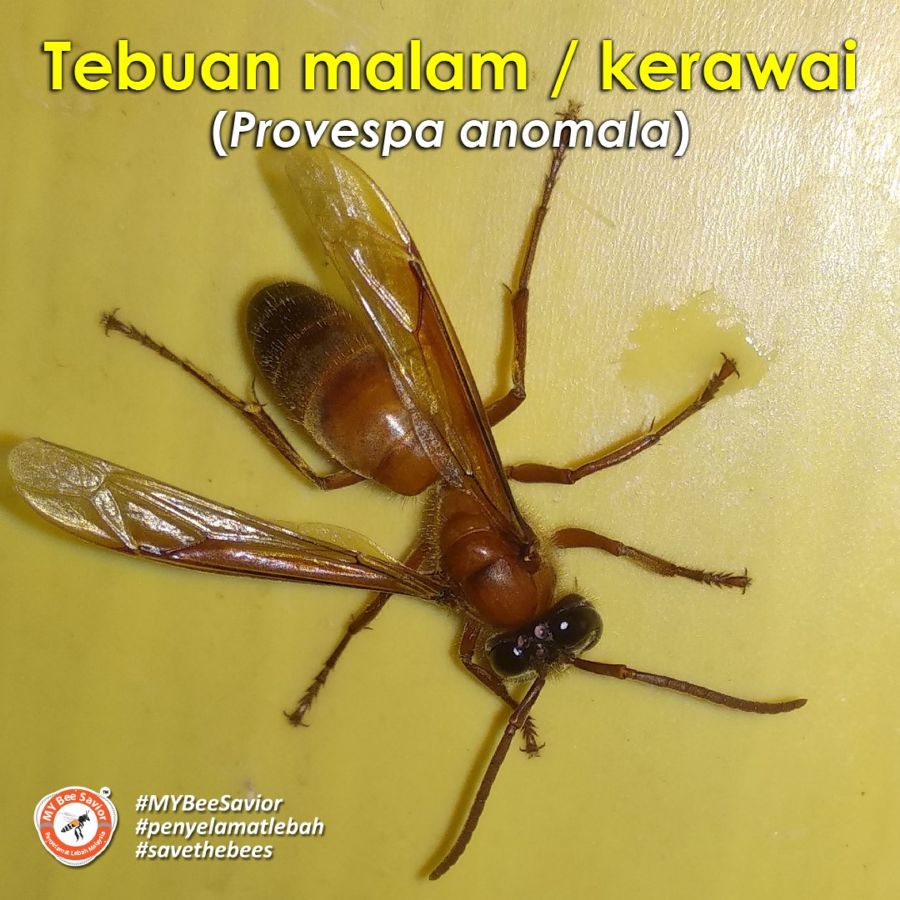
Night Hornet
NOT A BEE

Night Hornet

Danger

Provespa anomala

Reddish brown, large, with dark eyes. Active at night and often flies into homes, drawn by lights.

Switch off lights and close windows at night. If you find a nest, call the Fire Department.

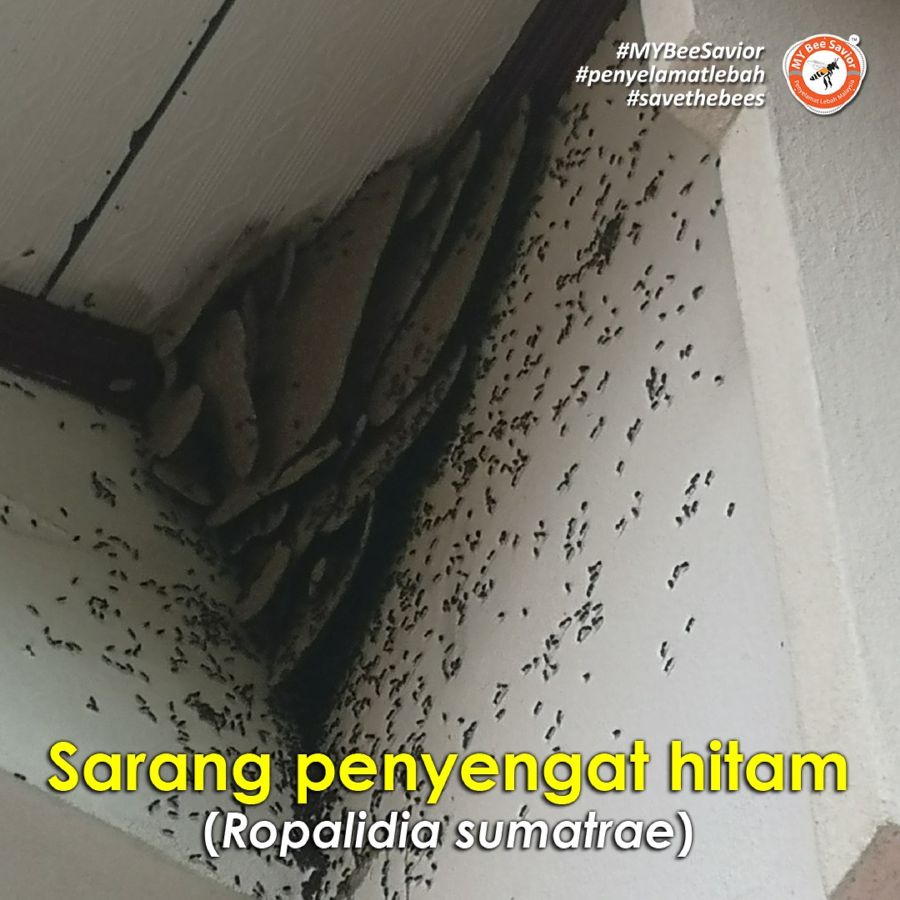
Black Paper Wasp
NOT A BEE

Black Paper Wasp

Be careful

Ropalidia sumatrae

A slender black wasp. Builds many open paper combs (no outer shell) in ceiling corners and under eaves. Crowds of wasps on the combs are easily mistaken for a bee swarm.

Painful sting and it defends its nest. Don't disturb it; call the Fire Department or pest control.

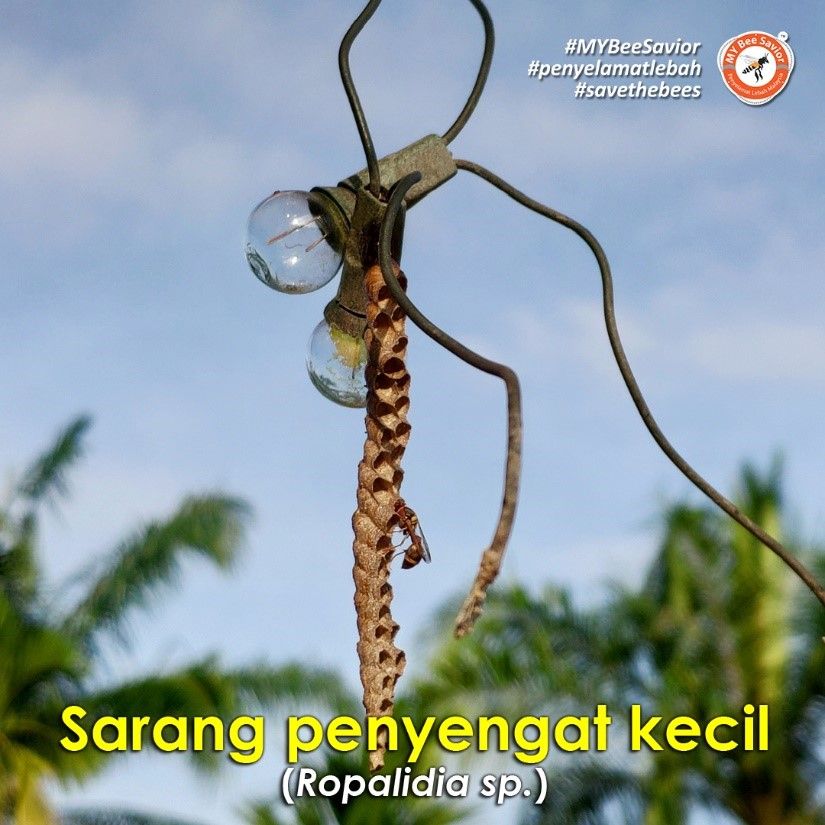
Small Paper Wasp
NOT A BEE

Small Paper Wasp

Low risk

Ropalidia sp.

A small, elongated paper nest hanging from a wire, twig or leaf, with only a few wasps.

Usually won't attack unless touched. Leave it, or ask pest control for help if it is on a walkway.

Hover Wasp
NOT A BEE

Hover Wasp

Harmless

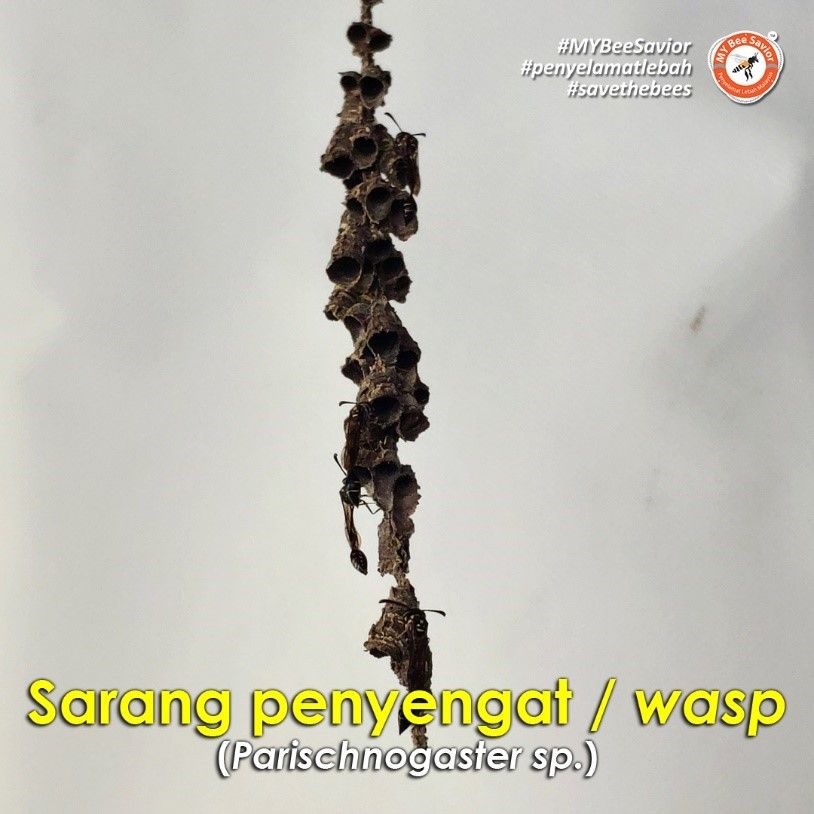
Parischnogaster sp.

A very slender wasp. Its nest looks like a chain of tiny cups hanging from a thread or fine root.

Gentle and rarely stings. No action needed.

Potter Wasp
NOT A BEE

Potter Wasp

Harmless

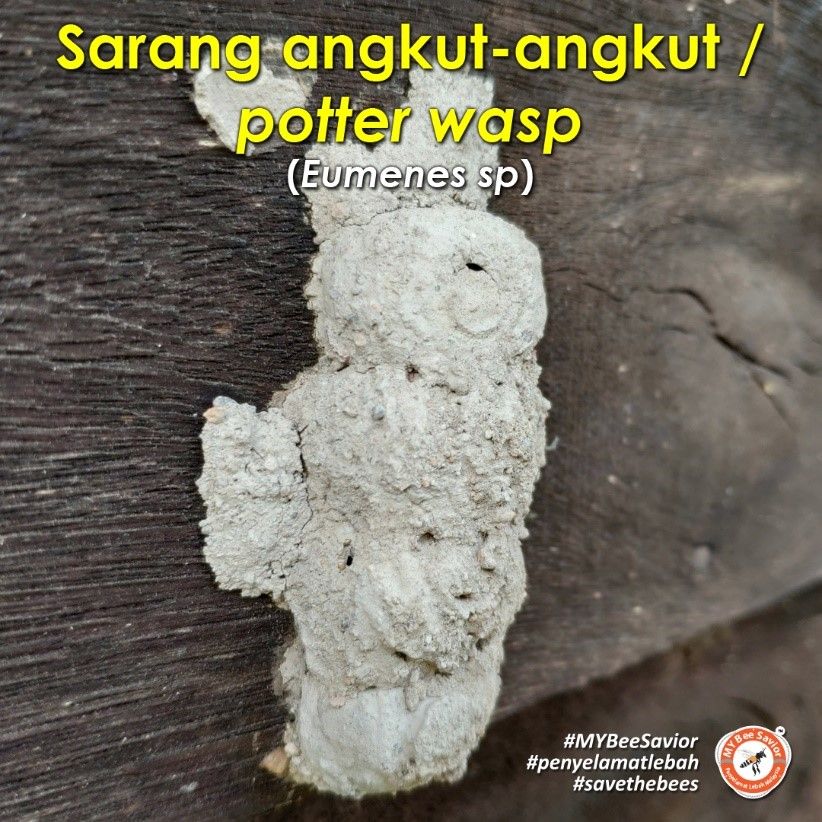
Eumenes sp.

A solitary wasp that builds hard mud nests on walls, doors, furniture or fabric.

Not aggressive. Leave it, or scrape the mud nest off once it is empty.

Hoverfly
NOT A BEE

Hoverfly

Harmless

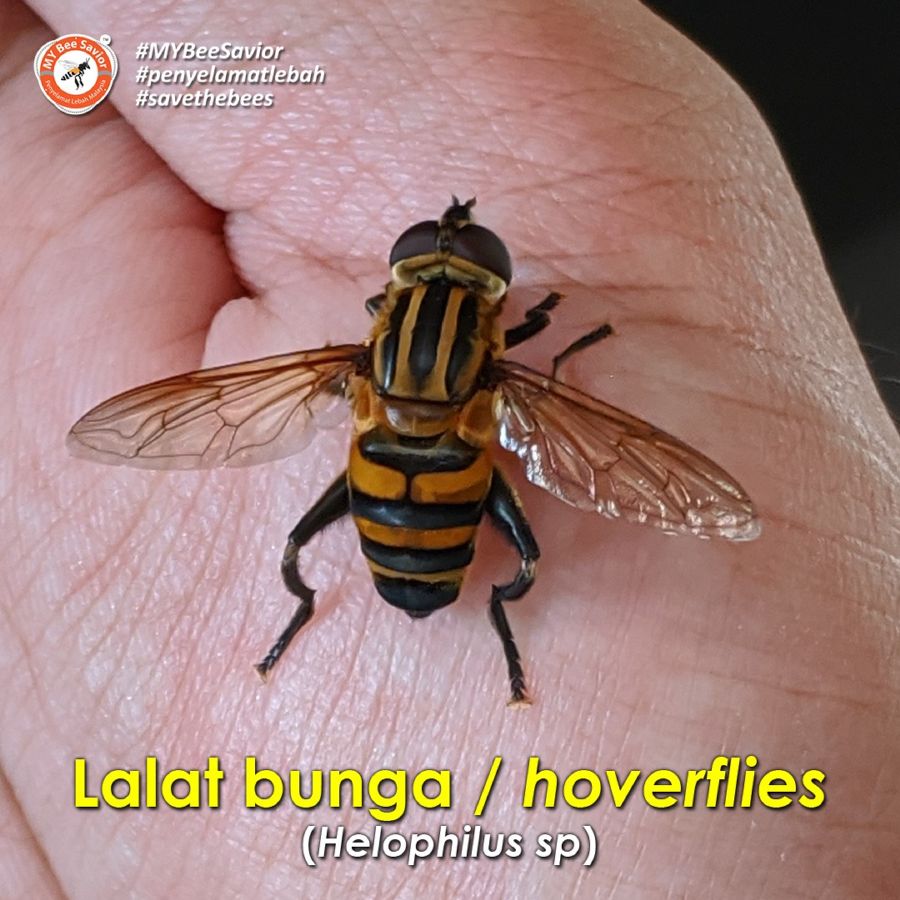
Helophilus sp.

A fly dressed up as a bee: only 2 wings, very large eyes, short antennae, and it can "hover" motionless in mid-air.

It cannot sting at all. It is a useful pollinator.

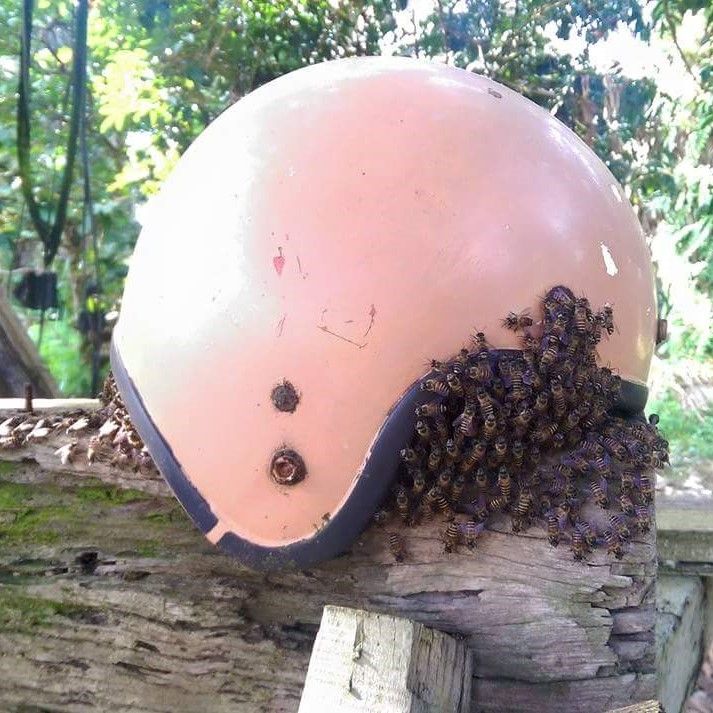
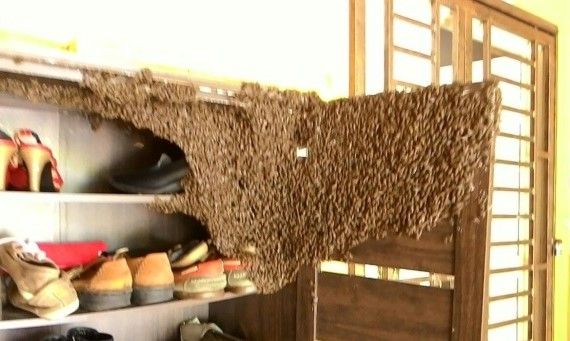
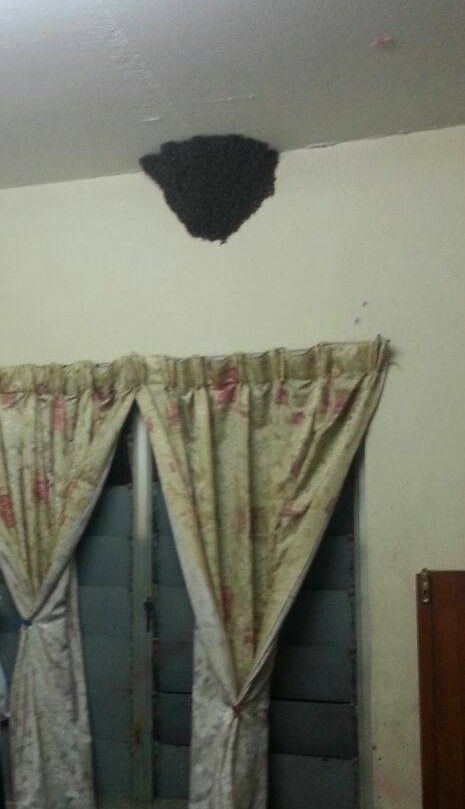
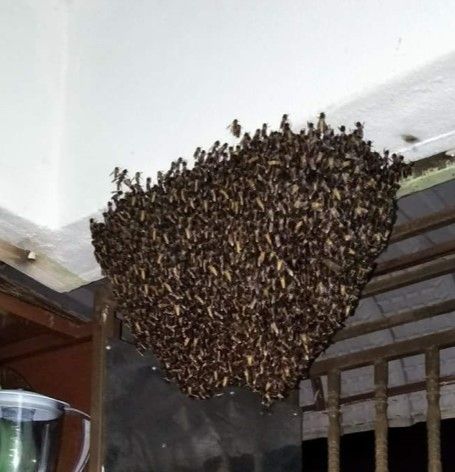
Real cases from our activists

Bees can nest almost anywhere

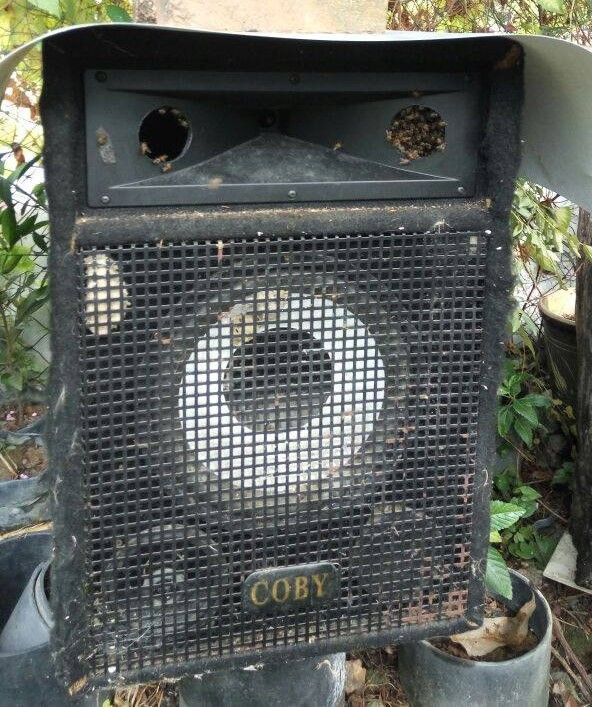
Scout bees look for a dry, sheltered, dark space. At home, that could be an old speaker, a helmet, a shoe rack or the ceiling.

Safety

Do's and don'ts

Do

  • Keep children, the elderly and pets away.
  • Close nearby windows and doors.
  • Switch off lights near the nest at night.
  • Take a photo or video from a safe distance.
  • Report it straight away. A swarm can move on within hours.

Don't

  • Don't burn the nest. It kills the bees and can start a fire.
  • Don't spray insecticide or oil.
  • Don't throw things at, knock or hose the nest.
  • Don't block the entrance of a colony inside a wall or ceiling.
  • Don't try to take the honey or comb yourself.
Giant honey bees forming hanging chains Warning sign: bees forming chains

When are bees more likely to attack?

  • When the nest is disturbed. Bees release an alarm pheromone and attack whatever has been marked.
  • In cloudy or rainy weather and late afternoon.
  • Nests that are long established, or that have been disturbed before.
  • Dark clothing draws more attacks. Wear light-coloured, thick clothes.

If attacked or stung

  • Run straight into a building or vehicle and protect your face.
  • Don't jump into water; the bees will wait for you to surface.
  • Scrape the sting out with a fingernail or card; don't squeeze. Wash and apply ice.
  • Trouble breathing, a swollen face or many stings: get emergency treatment now (999).
FAQ

Common questions

Is a bee swarm dangerous?

Usually not. Swarming bees have no nest or brood to defend, so they are calm. They will still sting if disturbed, so keep your distance and leave them alone.

How long will a swarm stay?

Usually a few hours to 2–3 days, until the scouts find a new home. If the bees start building comb, they will settle and need to be relocated.

Why not burn it or spray insecticide?

Bees are vital pollinators for our crops and forests. Burning or poisoning kills the whole colony, makes the surviving bees more aggressive, and risks fire or contamination. Our activists can relocate it safely.

Can I drive a swarm away myself?

Only for a swarm that is not yet nesting (just a few days, no comb), in daylight, and after warning your neighbours. Bees dislike strong chemical smells: soak an old cloth in floor cleaner, toilet freshener or mothballs, and place it near the cluster without touching the bees. The bees will take off as a swarm, then follow the scouts away. Never do this in the late afternoon or at night, and never use fire. If unsure, contact us.

Who should I call for a hornet nest?

Call the Fire Department (999) or your nearest fire station. MY Bee Savior only relocates honey bees.

There are stingless bees at my house. What should I do?

Stingless bees can't sting and are harmless. You can leave them. If they must be moved, contact us and we'll refer you to a kelulut keeper.

Why do bees keep coming to my house?

Scouts look for dry, sheltered spaces, and old comb and the smell of wax attract new swarms. After a colony is relocated, clean the old nest site: wipe it with used engine oil and coat it with mud, then seal the gap they used as an entrance.

Where do the bees go after relocation?

Colonies are moved into hive boxes or to places away from people, such as orchards and farmland, and cared for by our members.

Still not sure?Send a photo and location, and we'll help identify it.

Photos: MY Bee Savior activists. Content based on the MY Bee Savior Honey Bee Conservation and Keeping Course.